This is the chronicle of my last marathon, the Peak Lake Garda 42k, on the 12th of April 2026. And this is an event where I should have crossed the line last year, but due to some personal circumstances I didn’t get the chance to participate.
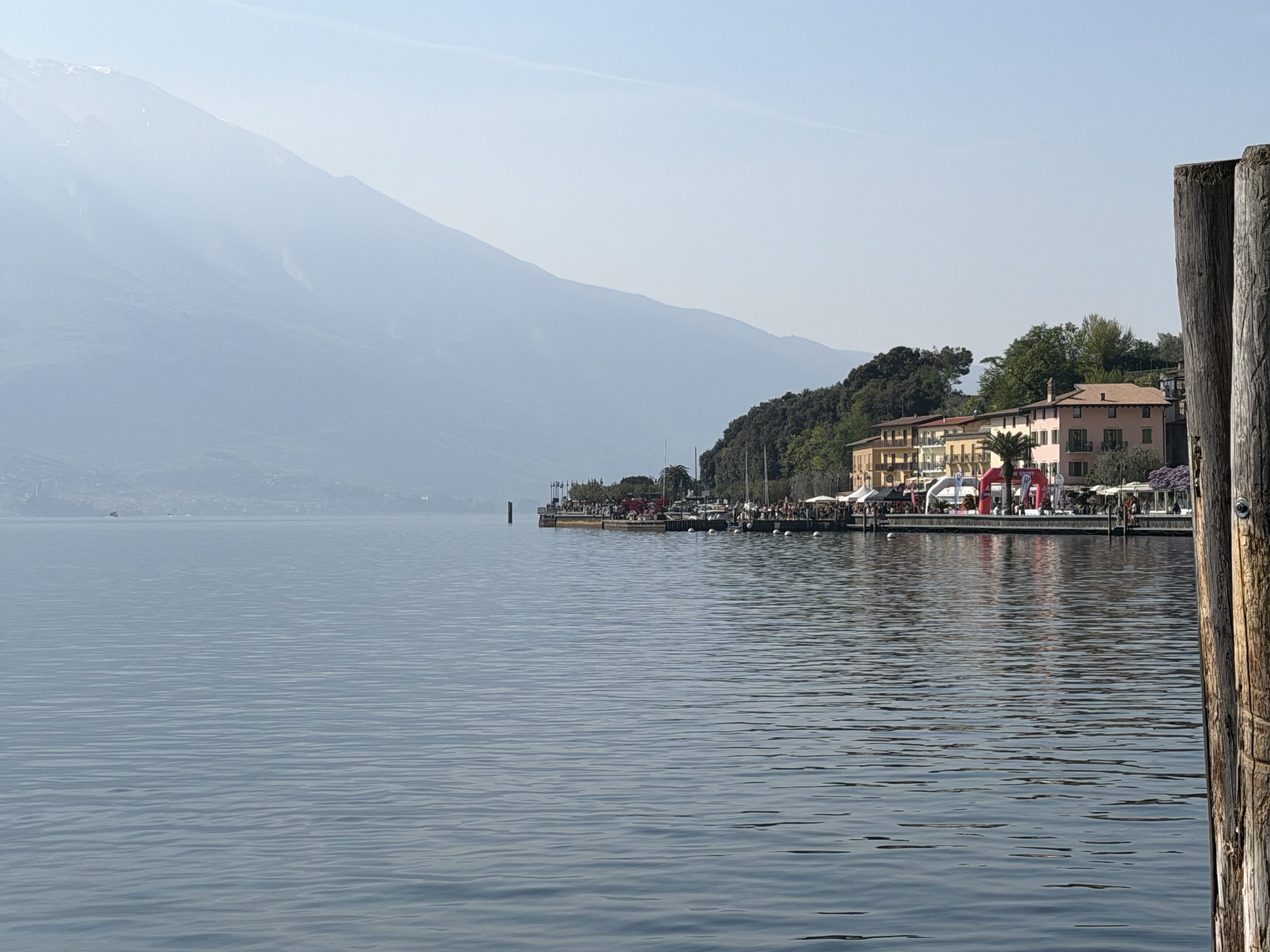
I knew before the start that I was underprepared. Not in the vague, modest way runners sometimes say this before a race, but in the very concrete sense that the preparation had been too short on volume and too short on long runs. I had done enough to arrive at the start line with a decent aerobic base, but not enough to honestly expect the body to enjoy 42 kilometers.
Still, there is always a small negotiation with hope before a race. You look at the course, at the weather, at the numbers from training, and some part of you still leaves space for a better day than the preparation suggests.
That space closed quite early.
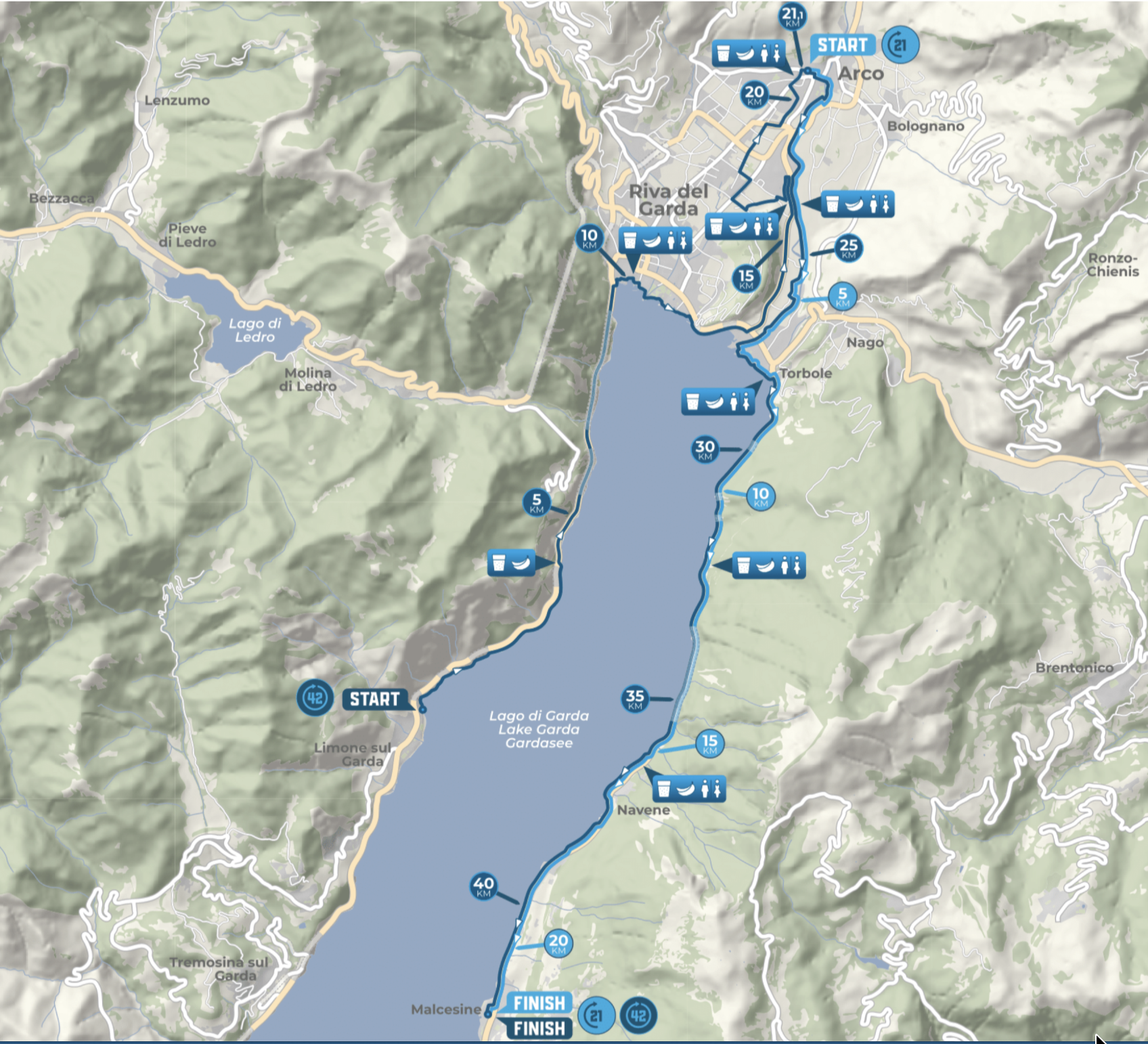
The first hills were not a surprise. I had walked them several times the day before, and once again on the way to the start. I knew where the discomfort would begin. Knowing the terrain, however, did not make the body much happier about it. The heart rate climbed during those first kilometers and, more importantly, it did not really come back down afterwards.
That was the first adjustment. The race stopped being about the time I had hoped for and became about staying constant, staying calm, and not turning an underprepared marathon into an unnecessarily ugly one.
I finished in 5 hours, 18 minutes, and 5 seconds.
My slowest marathon.
And probably one of the better executed ones.
What the preparation actually looked like
The preparation was not chaotic. It was just incomplete in a very specific way.
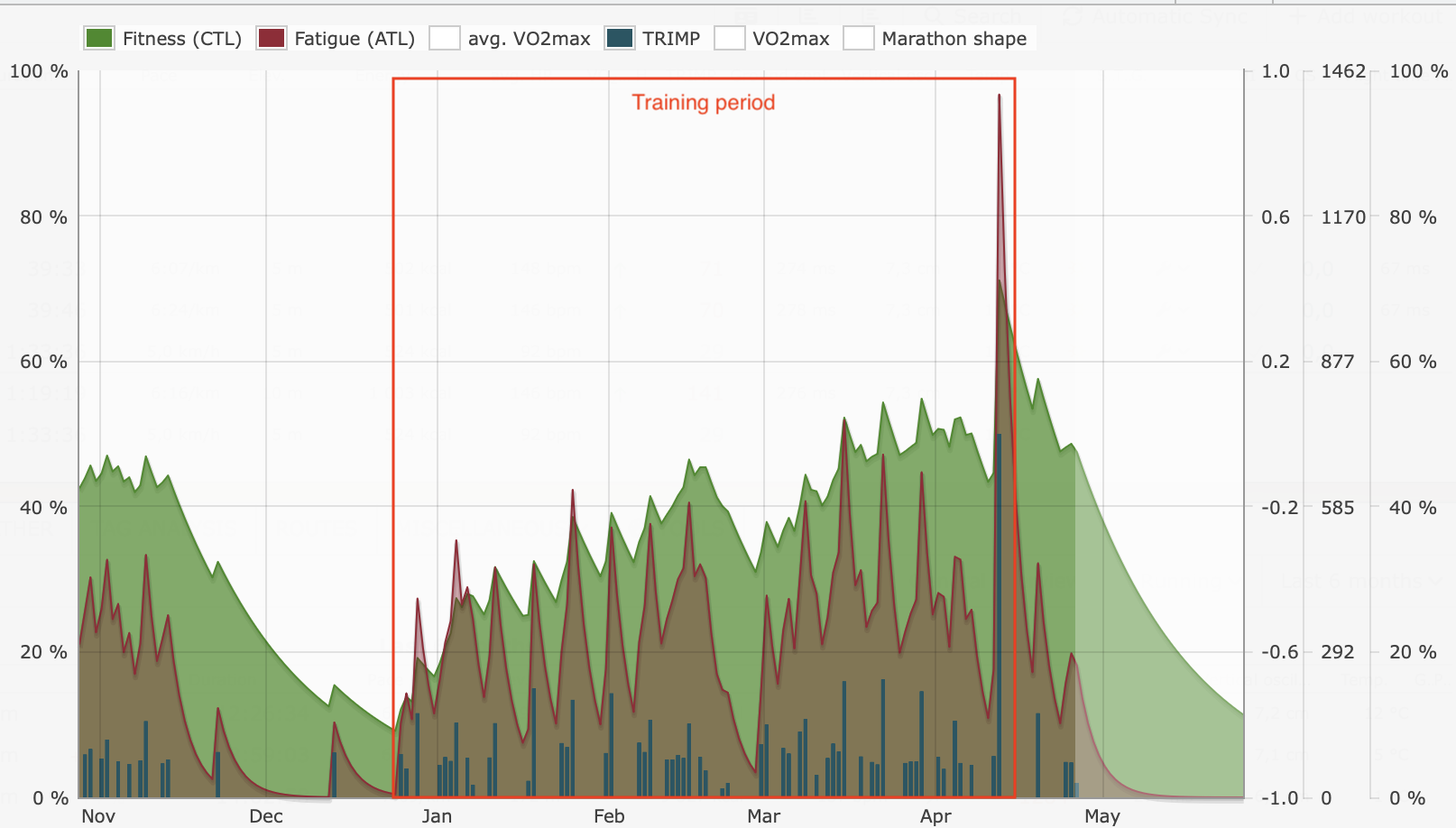
Across 15 weeks, I ran 470 kilometers, an average of about 31 kilometers per week. For a marathon, that is not much. Especially not if you still carry, somewhere in the back of your mind, ideas like 4:30 or even something close to 4:50.
The longest run in the entire preparation was 21.5 kilometers. I did that twice. That matters, because the marathon is not only a cardiorespiratory event. You can have a decent aerobic engine and still not have the structural resilience required to keep moving well after three, four, or five hours.
Looking at the data afterwards, over 90% of my power output during the preparation sat in Zone 2. Easy aerobic running, almost exclusively. That explains part of why I could stay calm and keep moving. It also explains why the race became expensive muscularly in the second half.
The engine was there but the chassis had not been trained enough for the road.
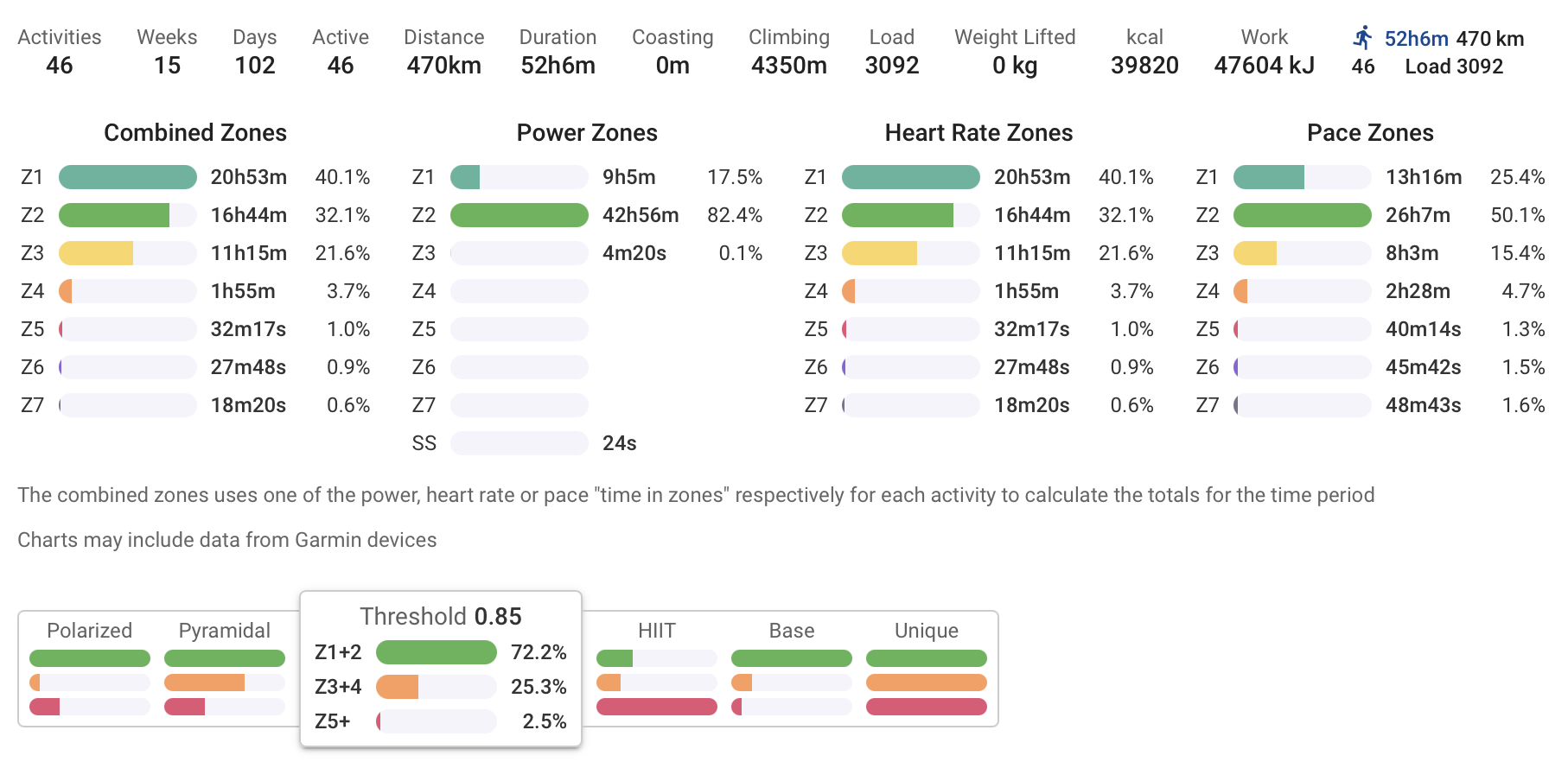
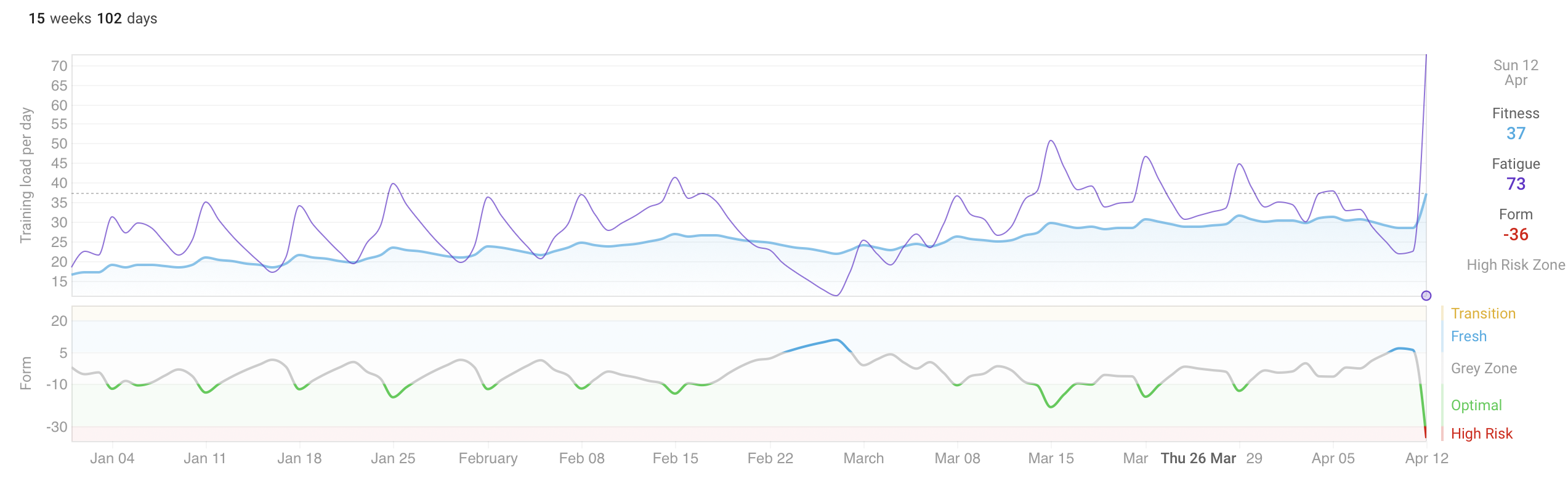
The fitness curve grew slowly but steadily across the 15 weeks, reaching 37 by race day. Not a big number, but an honest one. It reflected exactly what had happened: consistent work, just not enough of the very specific work that a marathon asks for.
The morning of the event
Race day started with the usual rituals: alarm, coffee, getting dressed, trying not to think too much.
At 8:05 AM, I walked 2.93 kilometers to the start. A small warm-up by accident rather than design. My wife pointed out that we had already done that walk several times the day before. She was right. We had walked those slopes again and again, partly because of logistics, partly because that is what happens when you are in a place like Lake Garda and everything feels worth seeing on foot.
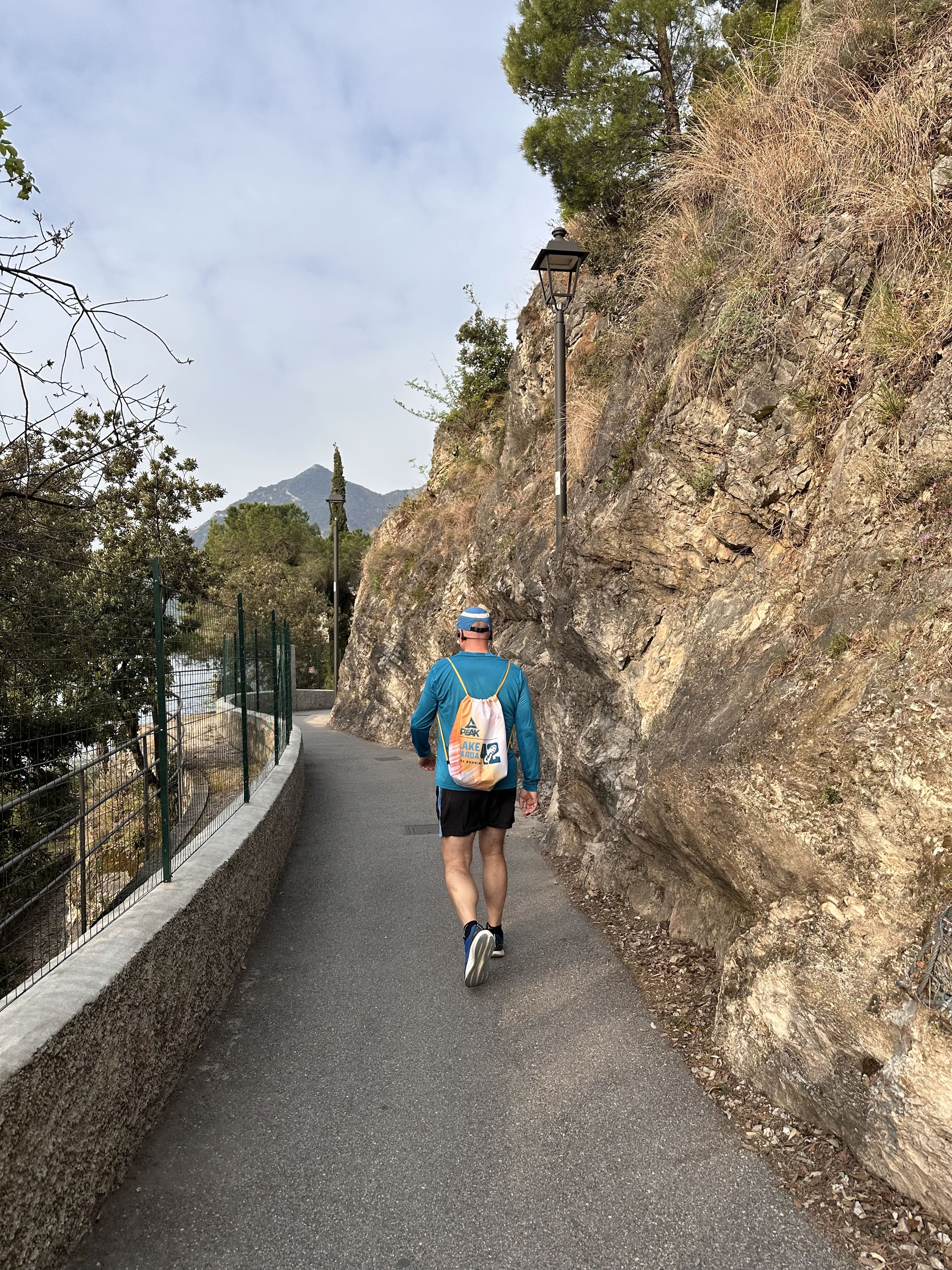
I also arrived at the start with fatigue that did not come only from training. We had driven for two full days to get there, and there would be another two days of driving after the race. That is not an excuse, but it is part of the real context. Bodies do not separate neatly between “training fatigue”, “travel fatigue”, “walking around fatigue”, and “race day freshness”. They just carry the sum.
The plan was simple: run by power, keep the effort conservative, use heart rate and pace as secondary signals, and avoid the classic marathon mistake of spending too much in the first half because everything still feels possible.
The first hills made that plan even more necessary.
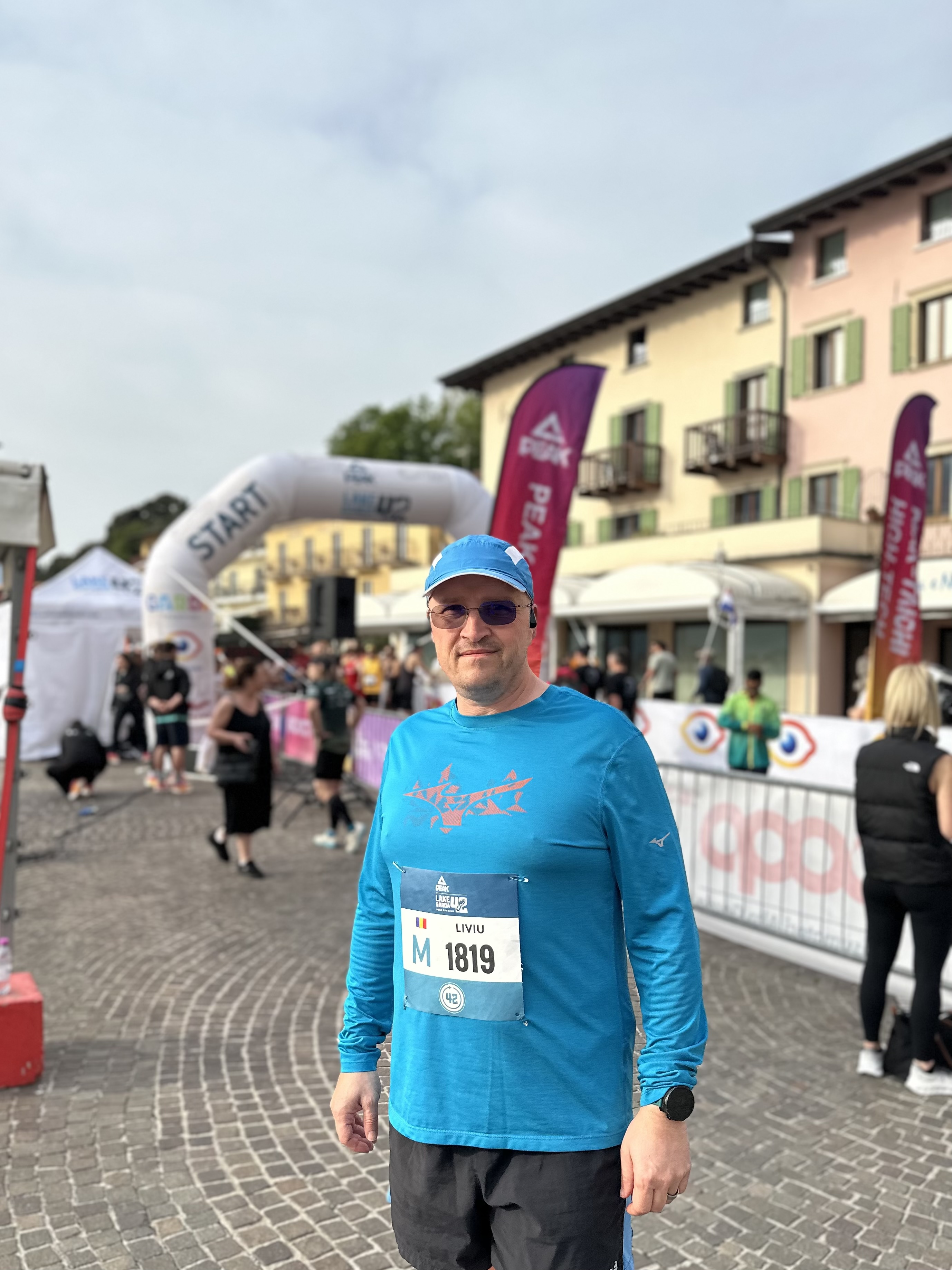
I did not attack them. I did not try to compensate. I stayed disciplined. What I had not expected was that, after the hills, the heart rate would remain higher than I wanted. That was probably the moment when the race became less about ambition and more about management.
The nutrition experiment nobody recommends
I had assumed there would be a proper expo at bib pickup in Arco. Not necessarily something like Athens, but at least enough vendors to buy familiar products or make a decent choice.
There was one vendor selling gels. One brand I had never used before: EthicSport.
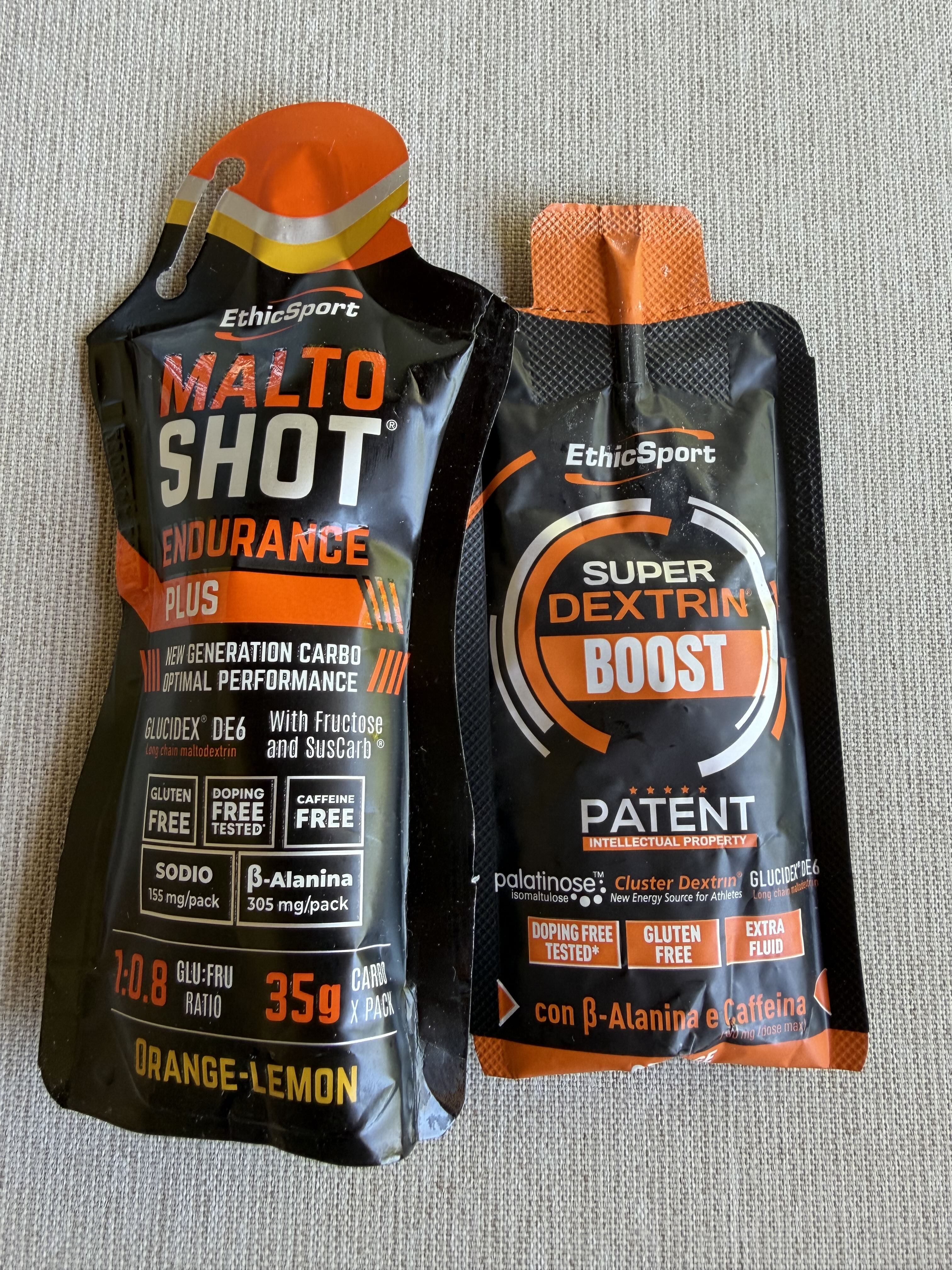
I had also forgotten my water flask at home, which meant I could not fully control when I took the gels. I had to work with the refresh stations on the course. They were not exactly every five kilometers, and I had not memorized their positions properly, so the system became approximate: take the gel a few hundred meters before the next station, hope the station appears where I think it should, drink whatever is available, continue.
Every marathon rule says not to experiment with nutrition on race day. This was not bravery. It was just poor planning meeting limited options.
The improvised protocol was three MaltoShot Endurance gels in the first half, then three Super Dextrin Boost gels with caffeine in the second half. It worked in the practical sense that it did not obviously fail. I did not hit a classic wall, I did not feel empty, and I never had the sense that the race was collapsing metabolically.
The problem was elsewhere.
The race itself
The numbers say I paced the race well.
Average power: 226 watts. Normalized power: 229 watts. Variability Index: 1.01. Also the HR wasn’t amazing, but decent.
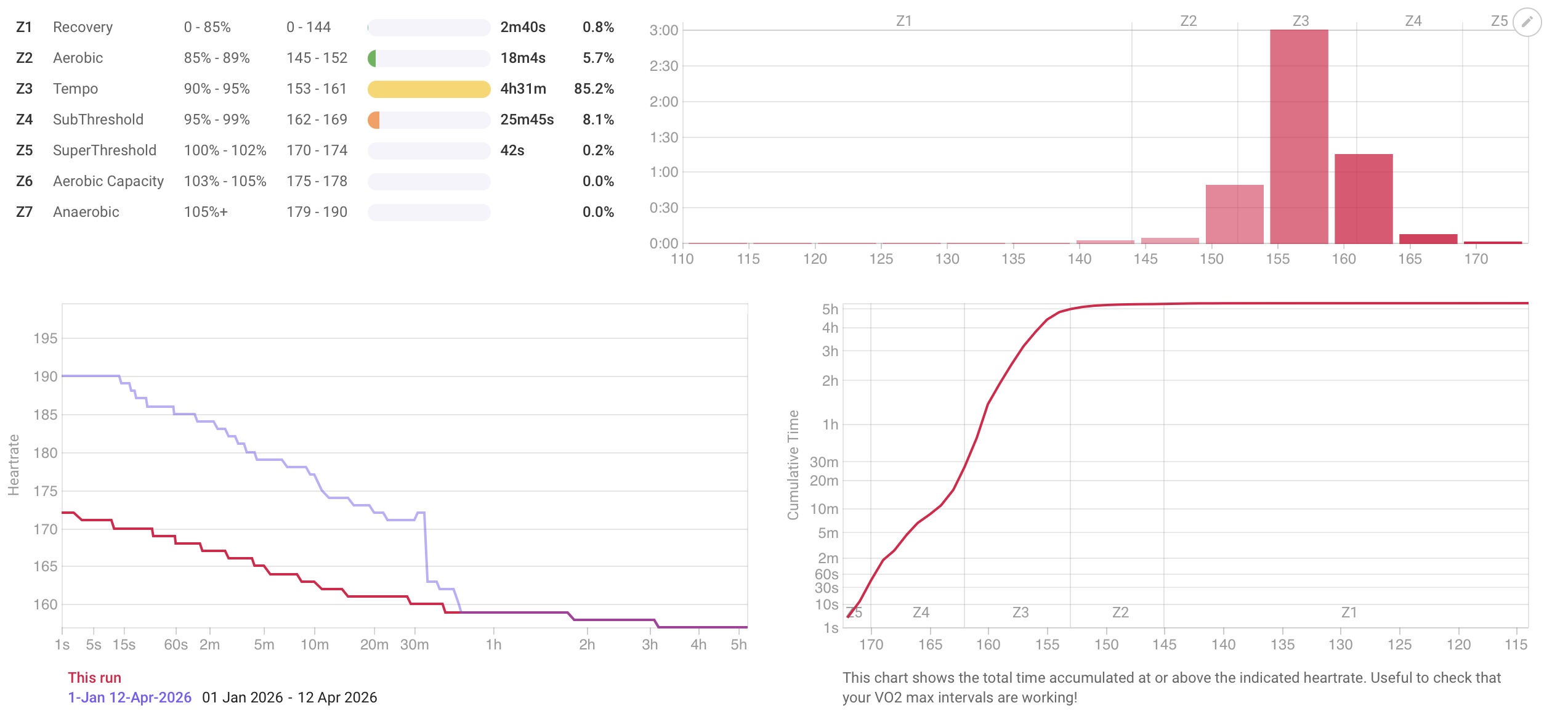
That is almost absurdly even for a real-world marathon course, especially one with hills, turns, tunnels, refresh stations, and a body that was not exactly overprepared.
But this is also where the numbers can mislead if they are read too simply. A stable power line does not mean the effort feels stable. It means the output stayed stable. The cost of that output changed.
Heart rate averaged 157 bpm, around 83% of max. It was already higher than I wanted after the first hills, and while it did not explode, it also never gave me the feeling that I had settled into the kind of comfortable aerobic rhythm I would have liked.
The pace told the more brutal story. I had initially imagined something around 6:30–6:45/km. Maybe not heroic, but controlled. When I started seeing 7:00/km and then 7:20/km often enough, I had to let go of the clock.
That was not easy. For me, 7:20/km feels uncomfortably close to fast walking. Seeing that pace while still feeling that I was running creates a strange mismatch. The mind says: this is slow. The body replies: maybe, but this is what we are doing now.
Around kilometer 30, the race became mostly about preserving the act of running. I did not have cramps. I did not feel destroyed. But the thighs and hips were tight, the elasticity was gone, and every restart after a hydration point felt like something that had to be negotiated.
I started looking forward to the refresh stations with too much emotion. Not because of the water itself, but because they offered a socially acceptable reason to walk for a few seconds.
I had been in a different version of this situation before, in Valencia, where after starting too fast I switched around kilometer 32 to alternating running and walking. I did not want that here. Not because walking would have been a moral failure, but because I knew that for me, on that day, it could easily become the beginning of the end of the race as a run.
So running became the last small redoubt. Even when the pace looked bad. Even when the numbers were not flattering. Even when the body was clearly asking to renegotiate the contract.
The part that was still beautiful
One risk with looking at the data is that it can make the race sound more mechanical than it was.
There were places where I genuinely enjoyed being there. The path above the lake was beautiful in a way that did not need much interpretation. The tunnels were cool, literally and physically, and that helped more than I expected. There was sun at the start, but it did not dominate the whole race, which probably saved me. It was warmer than most of my training runs, but not brutally hot.
Riva del Garda gave me energy. The parks, the people, the atmosphere — all of that helped. After Arco, the paths along the river had that calm, almost unfair quality of places where you think: it must be nice to have this as your normal running route.
That also mattered. Once the time goal was gone, the race did not become empty. It became more available. I could still look around. I could still notice where I was. I could still enjoy the fact that, despite the poor preparation and the increasingly heavy legs, I was running around Lake Garda.
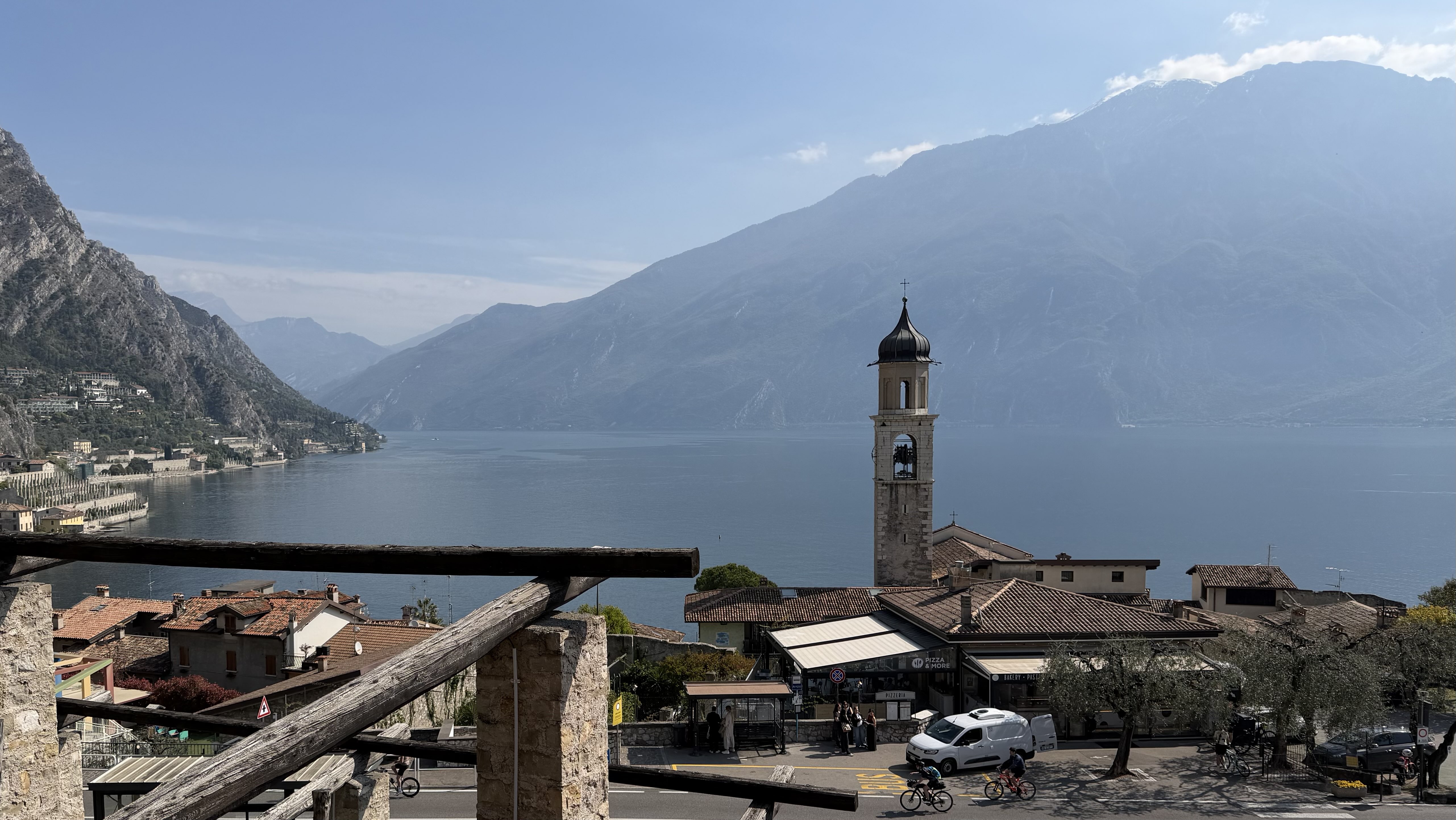
Not fast. But still there.
The mind and the body
What I found interesting afterwards was not that I slowed down. That part was predictable.
What stayed with me was the gap between knowing what to do and being physically able to do it at a reasonable cost.
I knew the target power. I knew the heart rate range. I knew why I had to stay conservative. I also knew, once the pace drifted, that chasing time would be stupid. The cognitive part of the race was clear enough.
The body was the limiting system.
Not in a dramatic way. No cramps, no collapse, no heroic suffering. More like a progressive loss of elasticity. The legs could still follow instructions, but each instruction became more expensive.
This is probably the most honest lesson from the race. You can compensate a lot with discipline, pacing, restraint, and experience. You can avoid turning a difficult day into a disaster. You can use the mind to manage decline. But the stopwatch still belongs to the body.
A weak race time can coexist with good execution and that does not make the time less weak. It just makes the story more accurate.
After
Crossing the finish line in Malcesine felt like release.
I was not destroyed. I still had some resources left. But the effort had been large, especially mentally. It was less a celebration of peak fitness and more a confirmation that I had used the preparation I had, not the preparation I wished I had.
The time was disappointing on its own. There is no need to decorate that too much. Over five hours is not what I had hoped for. I had imagined 4:30 as an ideal scenario and would probably have accepted 4:50 as a reasonable compromise. By the time 7:00/km and 7:20/km appeared often enough, the negotiation with time was over.
From that point, the race became about finishing properly.
A few days later, the interesting surprise was recovery. Historically, after a long race followed by hours in a fixed driving position, I would expect to unfold myself from the car rather than step out of it. This time, after another long drive, I did not have that destroyed, locked-up feeling. That probably says something too. The race was slow, and it was hard, but it was not reckless.
By the end of race day, my form had dropped to -36. Deep in the high-risk zone, which seems appropriate after asking an undertrained body to cover 42 kilometers.
So the conclusion is not heroic.
I ran my slowest marathon.
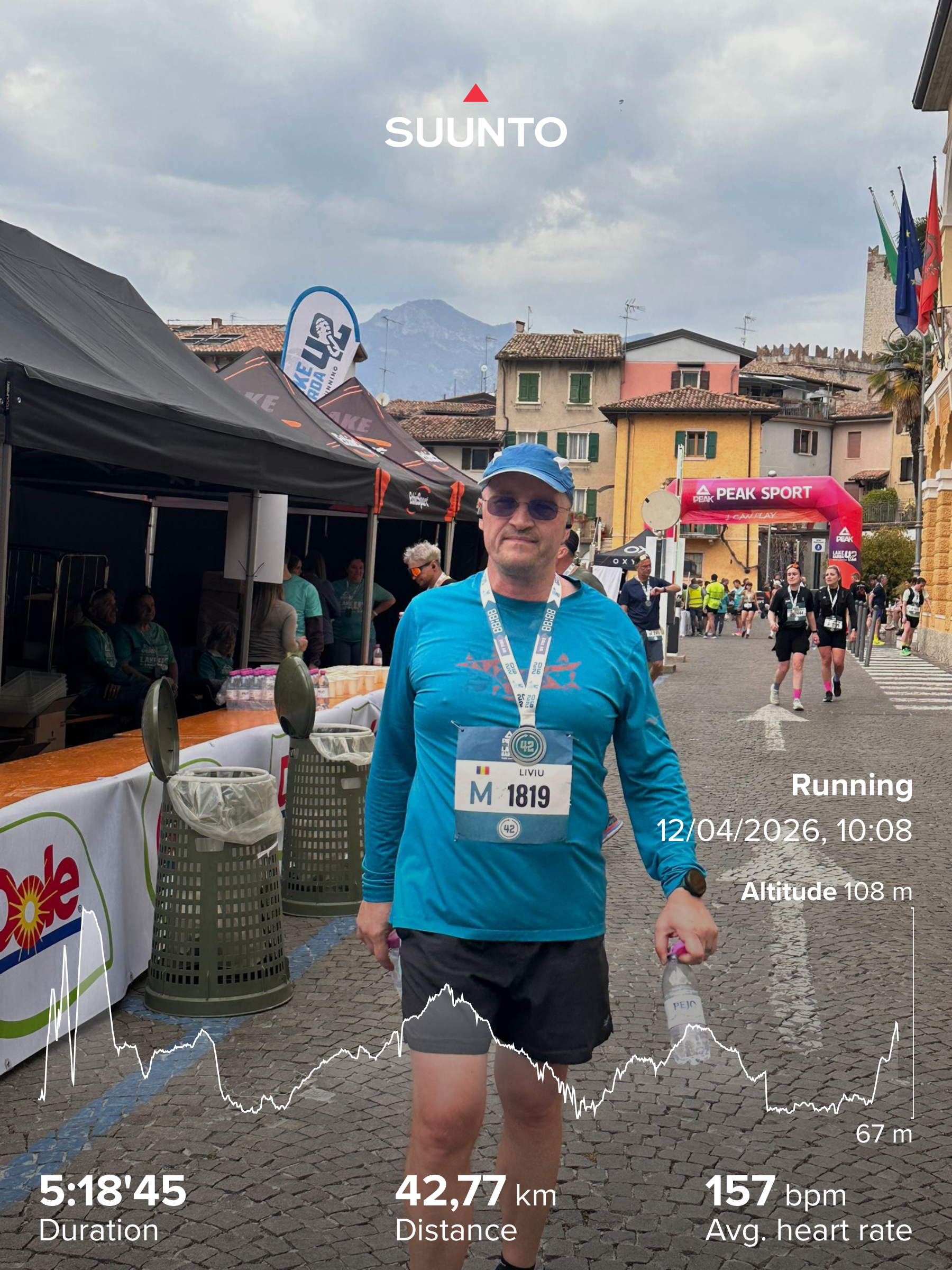
I also probably ran it about as well as I could have, given the preparation.
The mind helped a lot. It kept the race controlled, stopped me from chasing a fantasy, and helped me stay inside the effort when the numbers became less pleasant.
I also had a good experience with the Suunto Vertical 2, which replaced my Suunto Race 2 for this race. It did not change the legs, obviously, but it was a reliable partner for the whole distance. Stable enough, predictable enough, and honest enough, even when the pace it displayed was not what I wanted to see.
Now the focus moves to the next challenge: getting back to a better half-marathon first, before registering for the next marathon.
Discover more from Liviu Nastasa
Subscribe to get the latest posts sent to your email.

 Liviu Nastasa
You are big!
Congrats!