Last week I was traveling to Eindhoven and thought it would be smart to bring my Garmin Enduro 3—after all, what better way to explore an unfamiliar city than to rely on its navigation features? That was the plan. Instead, it turned into a small but telling example of how technology, in its effort to give us more, sometimes delivers less.
I created fast in the Garmin Connect a new course in Eindhoven, an automatically generated one starting from a desired distance of about 6km. Sent to device (they said) .. no issues here. Until I went down, in front of the hotel, and tried to find the course to follow on my watch after the GNSS connection was ready. Tough luck .. I couldn’t find the course anywhere and my watch said that I have 100 courses (in addition to other POIs) .. the watch had all the routes in the world—except the one I actually needed. I spent the next 10 minutes trying to “push” the course from my phone to the watch, or search it somehow .. no success. In the end, I started running without any course loaded or the watch guiding me .. just some glances at the screen with the map made me realise that this is useless, because it updated slow with the turns I made and the details of the map (street names for example) were not very helpful during run, because the screen is too small (or my eyesight is not what it used to be). I used my instinct (personal and not the Garmin one) and orientation to go back to the area I wanted to end my run, it worked fine and made me realise that sometimes over-reliance to external devices could become a source of disappointment and takes away some of the fun.

When I came back I was so intrigued by the situation that I spent some time trying to understand where the problem was .. why such an apparently simple and helpful mechanism wasn’t working. [I know that there are various other ways to rely completely on your watch and the offline maps – generating the course on the fly or using the “route-back” function to redirect you safely “home”]
In addition to my Garmin Connect, I have on my phone the Garmin Explore, which is supposed to help you navigate through new places (with offline maps and POIs and routes). And there I had multiple collections of routes and POIs that I defined over the last 10 years and multiple devices starting at least with the Fenix 6X. The problem was that I opted for the simpler option of “Sync everything”, which flooded my watch with all the info .. ending up with all the data from my history with Garmin. After the sync with Explore happened, the Connect tried to send the new course there but didn’t recognise that the course wasn’t stored there (or able to display).
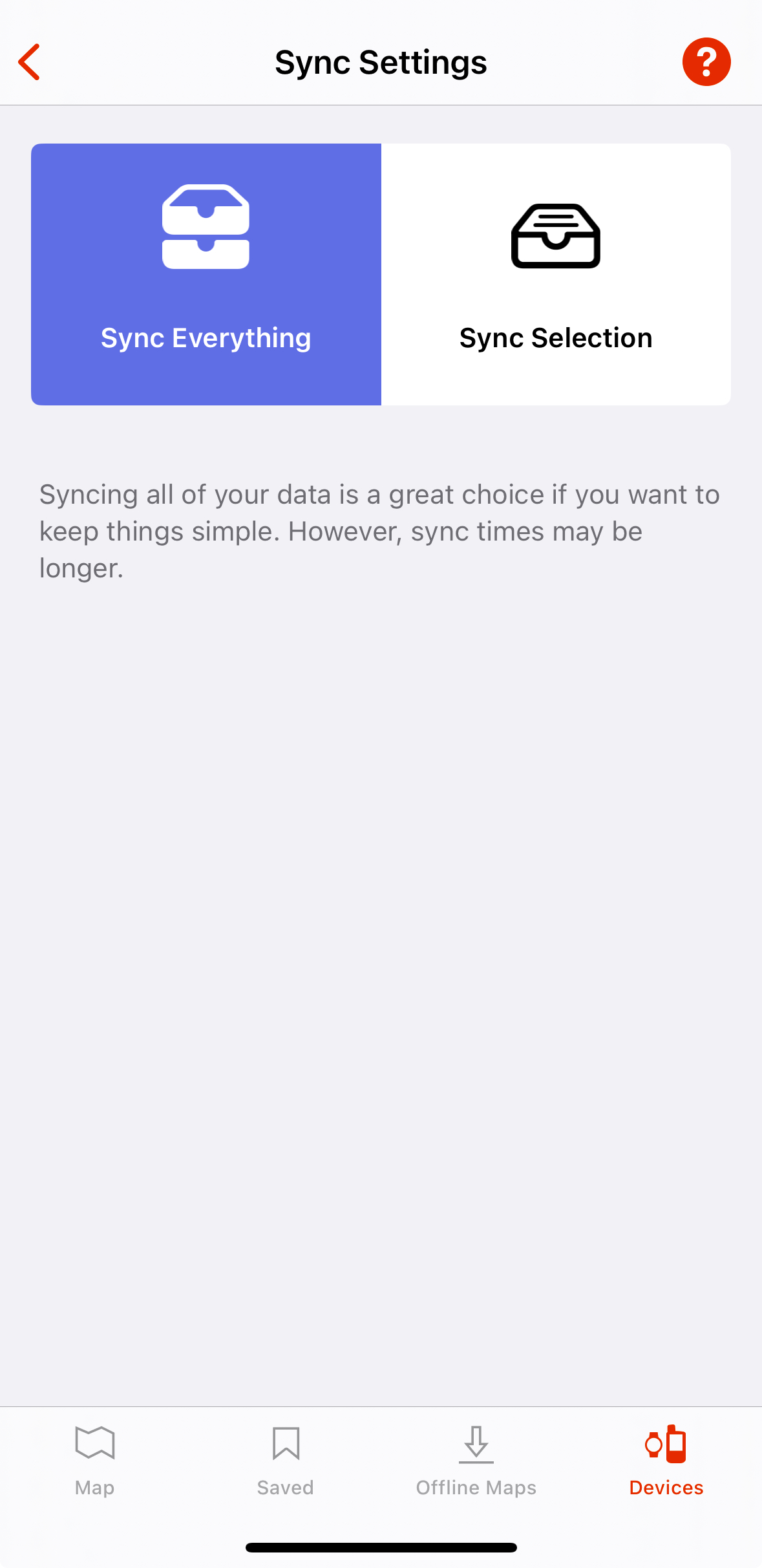
Garmin Enduro 3 (as it is the case with Epix Pro or Forerunner 965) has a hard cap of 100 courses and using the default “sync all” from Explorer made it “full” for any new attempt to load new courses.
What happened wasn’t a glitch, but a by design limitation:
- Hard cap: the Enduro 3 (like the Epix Pro or Forerunner 965) can store a maximum of 100 courses. Full stop.
- Default sync: Garmin Explore’s default “sync everything” option obediently flooded my watch with every course and POI from the last decade.
- Silent failure: once the watch hit 100, Connect still “sent” the new course, but the device had no way to display it. Garmin doesn’t flag this in a friendly message—it just looks like nothing happened.
In other words, the system did exactly what it was designed to do, but unless you already know the 100-course limit, it feels like something is broken.
Garmin has some unique strengths on the market, when it comes to maps:
- routable on device maps (no just bee-line go back for example, but actual navigation)
- offline maps for all continents (dependent on device, but most of the recent ones are OK with having all maps stored on the device)
- detailed maps (with street names or general POI)
But those strengths come with a price. Maps feel sluggish compared to Suunto, and too much information becomes noise—sometimes you just need a line to follow, not the names of every street squeezed onto a tiny screen.
This little episode left me with a few reminders worth keeping:
- Simplicity beats abundance: more features don’t always mean more value.
- Prune your digital backpack: keep only the routes you need, archive the rest.
- Trust yourself too: instinct and orientation are still skills worth keeping sharp.
In the end, I still ran close to 6km, didn’t get lost, and even had fun—just not the way Garmin had in mind.
Discover more from Liviu Nastasa
Subscribe to get the latest posts sent to your email.

 Liviu Nastasa