My journey with Suunto Vertical started a while back, so this is actually the third Suunto Vertical Titanium Solar watch that I’m using .. the first two I tested (for less than one month each) and at that moment decided that they are not “enough” or close to my expectations.
Meanwhile, Suunto released the ZoneSense, I got bored of the AMOLED screen of Epix Pro and also the information bombardment from Garmin (maybe their “new” app UI revamp played a role in this decision as well), so I decided to give Vertical another chance. And I’m happy to day that things got better and I managed to use Suunto Vertical as my primary training device and for some of the time as also a daily driver for the last 6 months.
This is not the typical sports watch review, or at least not as structured as what you see from other reviewers on the internet .. it will touch some of the topics I’m interested in and also, although I try to be as objective as possible, will mention my personal opinion and not something that may apply to everyone as our needs are different.
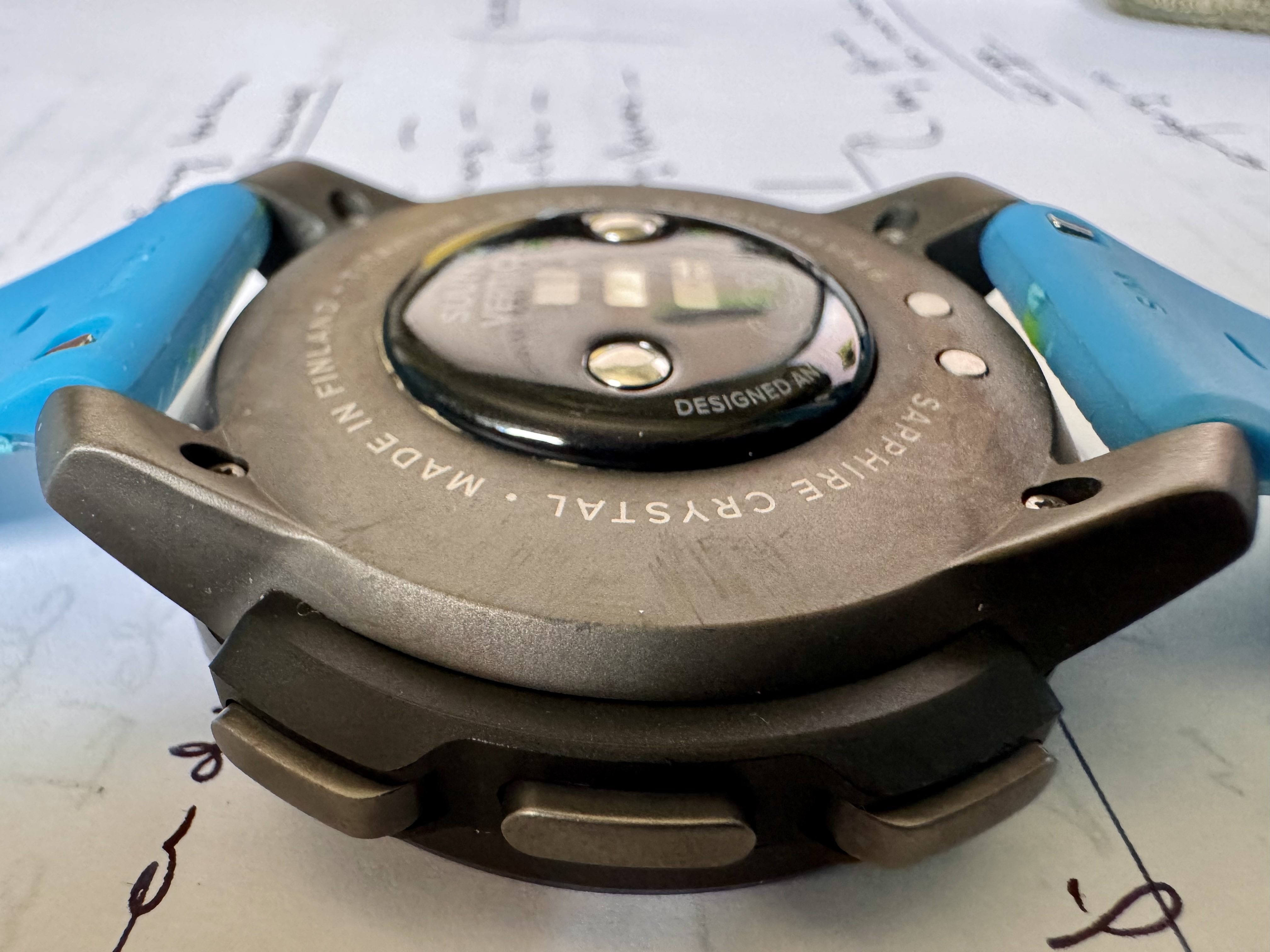
A few words about the looks and physical characteristics of Suunto Vertical Titanium Solar:

- nice size (49mm x 49mm x 13.6mm)
- decently lightweight (considering the size) – 74g
- comfortable (it’s the combination of lug positioning and size with sensor shape which makes life really easy with the watch) – it’s more comfortable (for me) than Epix Pro 51
- very good MIP screen – good contrast and easy to read fonts (with some exceptions when Suunto just forces you to read small text during structured training) – good backlight inside, configurable intensity
- standard 22mm bands, easy to swap – should you want to add more variety in your life
- good for snorkeling and more (100m waterproof)
I’m mostly using the device for running, walking and hiking ..occasionally indoor bike. Also, I tested its capabilities to be your 24/7 partner, measuring other parameters of your life like steps, sleep, BMR, daily HR .. let’s say the usual.
GPS accuracy – Suunto Vertical is praised for its outstanding performance with GPS, long life connected to dual frequency satellite (65h in best mode, can be extended to more than 80h with the right exposure in the sun). And it delivers, it is a great watch in terms of stability of its GNSS signal, the tracks look very clean and accurate – I compared it in various occasions with my Epix Pro 51mm and Apple Watch Ultra – it’s very good. Only once I had some issues, with some wobbling, but otherwise I see it as a trustworthy partner in all conditions.

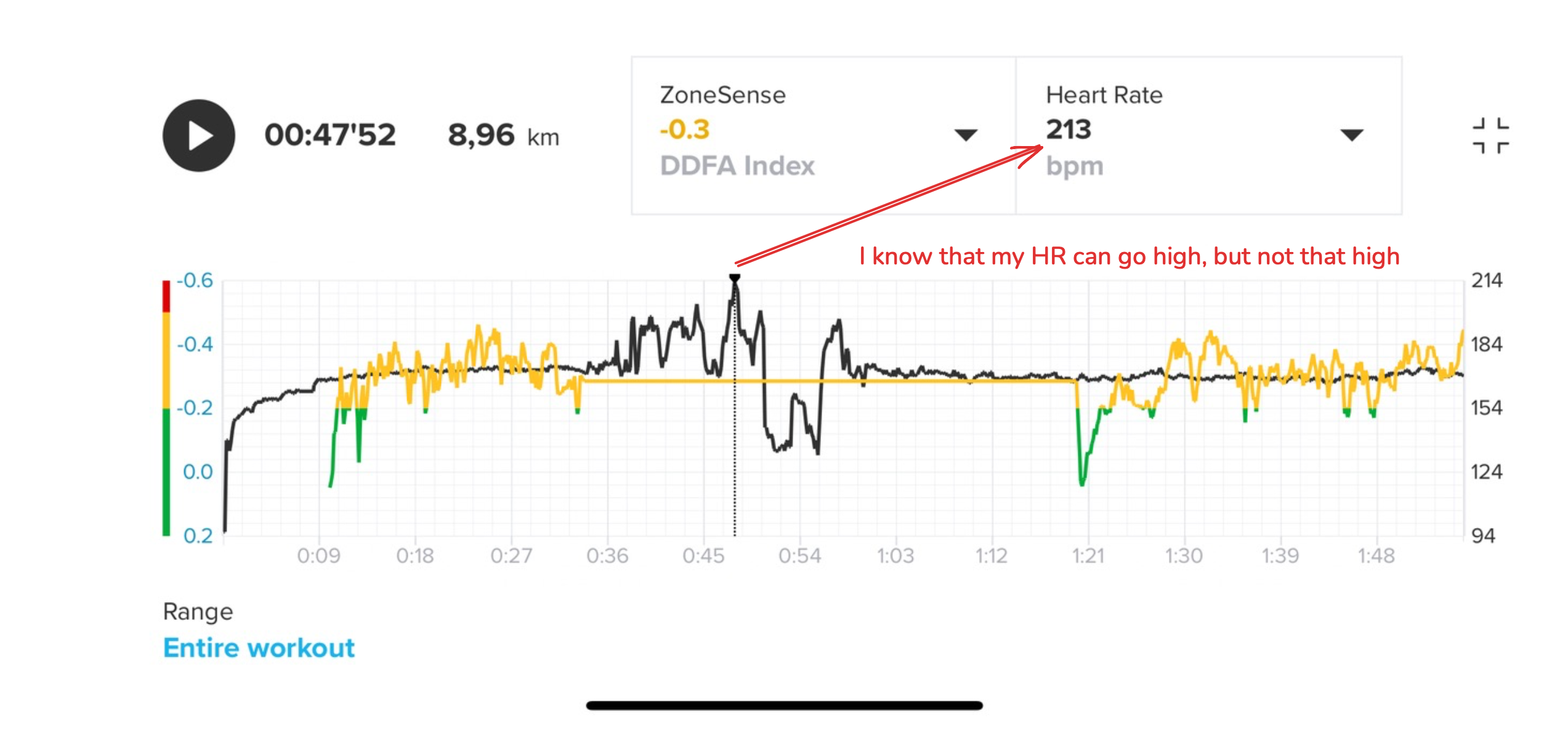
HR accuracy – the optical sensor is not great, at least not for demanding workouts – it does it’s job on daily measurements (and nightly), but you can’t count on it for interval training or even sometimes recovery training… it’s hit and miss. You’ll see this advice everywhere from people appreciating Suunto Vertical (the advice can be extended to Suunto Race or Race S even), that you need to purchase a chest strap if you are serious about HR values, and now with ZoneSense this advice is even more clear. So basically, I bought a Suunto Smart Sensor chest strap, which performed ok and pairs nicely with Suunto watches, with its built in memory being able to “fill in” some of the potential “gaps” in measurement.
Sleep tracking with Vertical in my case is not outstanding .. I mean, how should I put it .. it’s average at best. That’s because:
- from time to time Vertical starts measuring the sleep period too late compared to reality (it can miss from 30 mins to 1 hour of sleep) and the other watches I used in parallel were able to detect the sleep start moment properly (both Apple Watch and Epix Pro agree on the same start moment of the sleep, while Vertical is not)
- the depth of the sleep analysis is not the same .. I mean it doesn’t display sleep phases, not that I trust the other devices that are displaying this .. so, that’s not really a minus, but just a reality. Race and the later models from Suunto use a different algorithm and they display a deeper insight of the sleep, couldn’t say if that matters also for the duration of the sleep (but I would expect so)
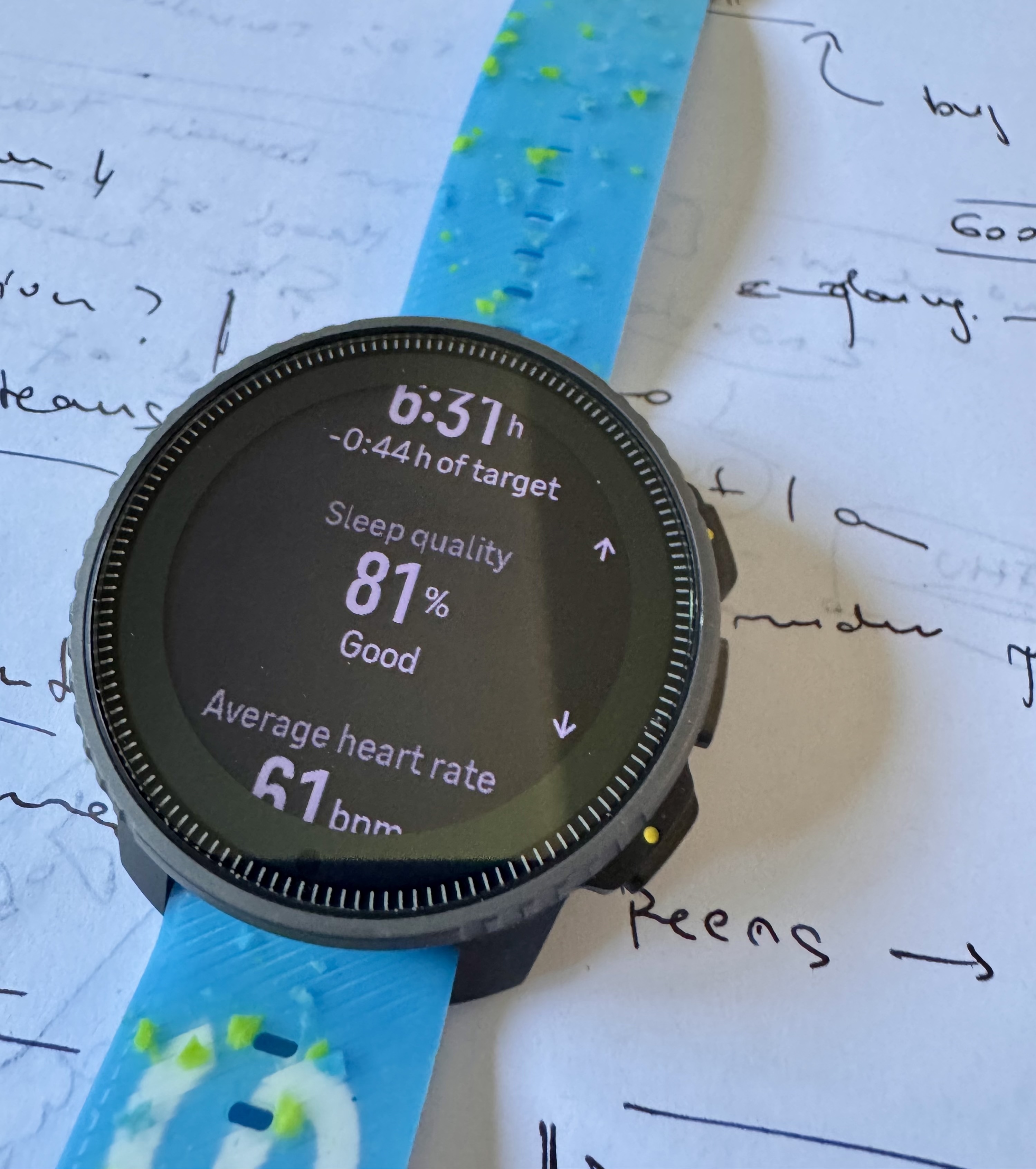
The sleep detection varies from individual to individual, some people claim that their Vertical works well consistently .. mine doesn’t .. sometimes it works just fine, but you won’t know, that’s not predictable. Is it that important, some may ask? Well, not really .. you (should) know how you feel, you don’t need your watch to tell you. But if you’re a data junkie or are used with other devices that were better at detecting sleep (start/end) you may be disappointed.
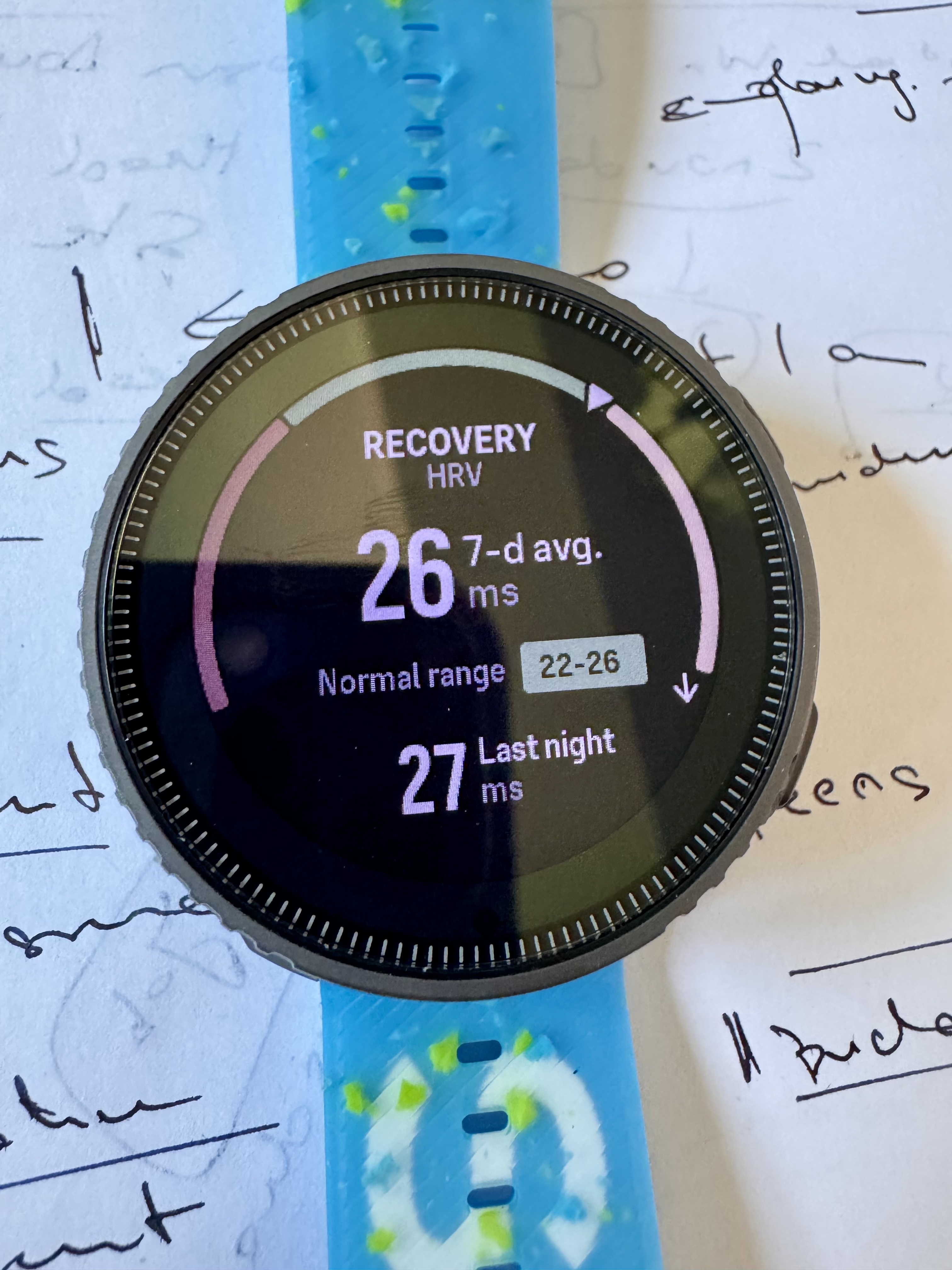
HRV measurement at night is a nice feature and could potentially help understand a trend about your stress status, but at the same time, it could reflect a lot of factors which are not reflecting your ability to perform (for example late dinner lowers the HRV .. but how that affects your ability to run a high quality session in the morning it’s not clear). Maybe switching to a HRV measuring protocol (similar to a orthostatic test) in the morning would more indicative of your ability to perform – so the nightly average values from Suunto (and for that matter Garmin) aren’t saying as much as a protocol well executed in the morning.
Sensor management – with Suunto Vertical (and Race/Race S) you can connect to bluetooth sensors, but until now only one sensor type at a time – that’s a bit weird and limiting .. I mean, I have multiple HR sensors (arm and chest straps) I could use but I need to pair them each time if I change the sensor, as Suunto doesn’t memorise the profile for each .. you don’t have names … so abundance becomes a burden with Suunto’s lack of flexibility. There are hopes that with the new OS updates prepared for the launch of Suunto Run, the management of sensors will be improved, going where all the other competitors are .. even older Suunto devices. No connection to ANT+ sensors though, that could become a limitation for indoor cycling is you need more data connections with trainers, HR straps, computer (tablet) and other sensors. That makes Suunto Vertical less atractive for people interested in connecting to indoor trainers or other devices (rowing machines and so on). Suunto is much more for the outside world, that’s their strength and not indoor activities.
Navigation – Suunto Vertical has offline maps, but you need to install them manually and that has a positive and a negative side as well – it’s flexible, but it’s slow. So basically, you can decide (sometimes its a bit more complicated to find what you need, but that’s another story) what part of the map you want to install, connect your watch to the WiFi network and wait for the sync to happen. You have 32GB of space available, that’s more than enough for the maps you may think of using. First time when I done it, it was painfully slow (up to an hour for 1.5GB of data), no matter the download bandwidth you have .. that improved with the last official firmware 2.40.38. and now the speed allows you to manage your maps easier. The maps don’t update so often (which is not great if you want the latest and greatest, but also you don’t have to invest time into updating them to become such a hassle) and they don’t include details of the map elements (like names of trails, streets or anything). So, the map is clean, and combined with the very responsive compass, I prefer this maps and navigation to what Garmin has to offer when I run on trails, it’s just easier to orient yourself and select the right track at the junction – Garmin is too slow and you need to contextualise the position on the map to decide what’s next. That’s why, even though on paper Suunto’s maps are inferior to Garmin’s implementation, in real life and for trail scenarios Suunto is preferred by many. The route generation, the go-to-point aspects of Garmin can’t be matched, but for planning your trips on the app and sync them on the watch, Suunto is a better and more usable solution.
Structured training – this is one of the areas where Suunto changed in the recent years, after switching from Ambit to Spartan/9 and now Vertical/Race generation – so, Vertical supports structured workouts (either created on the mobile app or imported/synced from partner apps like TrainingPeaks, FinalSurge, intervals.icu and a lot of other platforms) and uses a Guide to help you execute the workout. For most of them (with the exception of intervals.icu) you don’t get information about the current interval number (it’s interval work/rest 4 out of 6) and you don’t get alerts for over/under target execution .. no beep, no vibration .. you just look on the watch is see if you need to adjust. So, it’s not ideal and it’s not a core part of firmware (at least not yet). That’s potentially something that could allow improvements to be implemented faster as you don’t need to wait for the quarterly firmware update, but apparently they are not a priority. So, compared even with the default Workout App from Apple Watch, Suunto is less capable in this respect – of structured workout execution. It excels at pace stability (over AWU definitely), but this part is still a pain shared by a lot of people, at least those who are road runners. With trail (where Suunto in general is better positioned) expectations are different – long battery life, barometer accuracy, GPS accuracy, maps and compass responsiveness are much more valuable than the user experience for structured workouts.
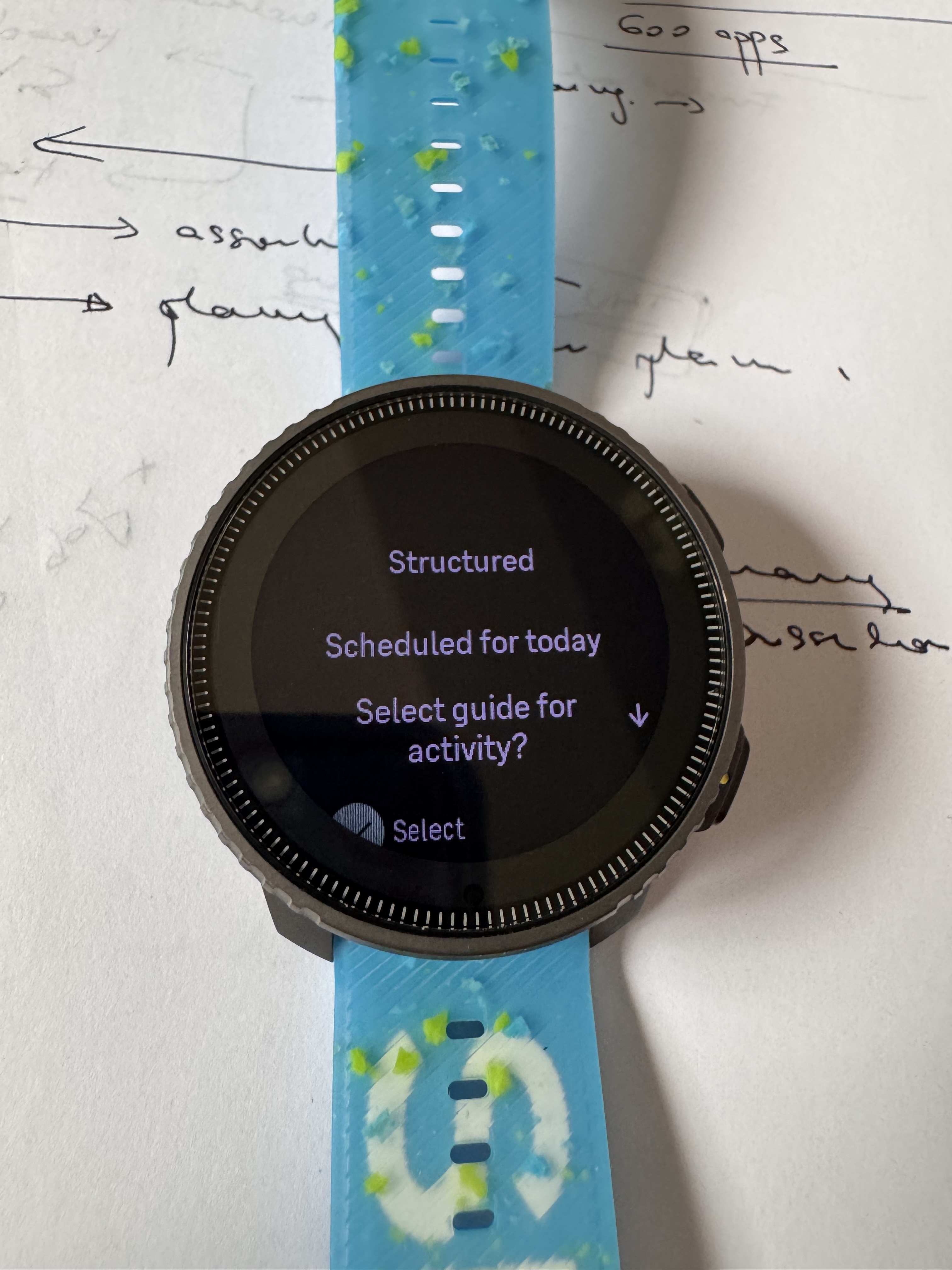


Based on the Structured Workout implementation (with Guides), you can perform complex workouts, but the support from Suunto is not as solid as with other competitors (Garmin, Coros or Polar). Things may evolve (with the new OS update of Suunto Run), but for now I’d qualify the implementation as being acceptable and not great. The fonts (for the instructions) are small, no alerts for above/under target, you need to take care of not being in one of the guides/apps screens when you want to pause/end the workout, because the top button will act as navigation menu button instead of pause/end button as it does in all the other native screens.
There are some improvements on the way, some seen in the new Suunto Run (released on 13th of May 2025), but even then I feel that the approach is not as user friendly as it should be. The fonts (also used by Vertical) to provide some guidance at the beginning of the intervals are painfully small and won’t help you a lot [that’s a common issue that also Apple Watch has, but at least they have some notifications during the intervals].

Sport modes – Vertical has (with the last firmware updates) more than 100 sport modes you can select (including Chores .. indoor/outdoor), but essentially they are not that different in the data collection part, they still work with basically the same parameters – GPS (if outdoors), HR, power so you won’t get a great amount of differentiation between some sports that you can see with Garmin for example .. look at bouldering in Garmin and Suunto for example.
In the end, this is something that Suunto supports, simplicity over huge volume of data – they prefer the trusted Training Peaks TSS for measuring intensity and managing load/recovery then, they don’t invent derived indicators like Garmin, so more simple and to the point I’d say.
ZoneSense – this is one of the distinctive features of Suunto, a very interesting one which is supposed to help you focus on your “real” effort and detect your LT1 and LT2 naturally based on real-time HRV data. You need to wear a chest strap (not necessarily Suunto, but the Smart Sensor from Suunto is very comfortable and works well with Suunto products – it can also do some offline recording and later offloading) and the first 10 minutes of your run will be used for calibration/baseline. ZoneSense is supposed to be used for longer workouts, it doesn’t mean much if you want to have short intervals (of 1-2 mins of effort) .. and it suits better (in my view) the ultra running use cases than road runners.
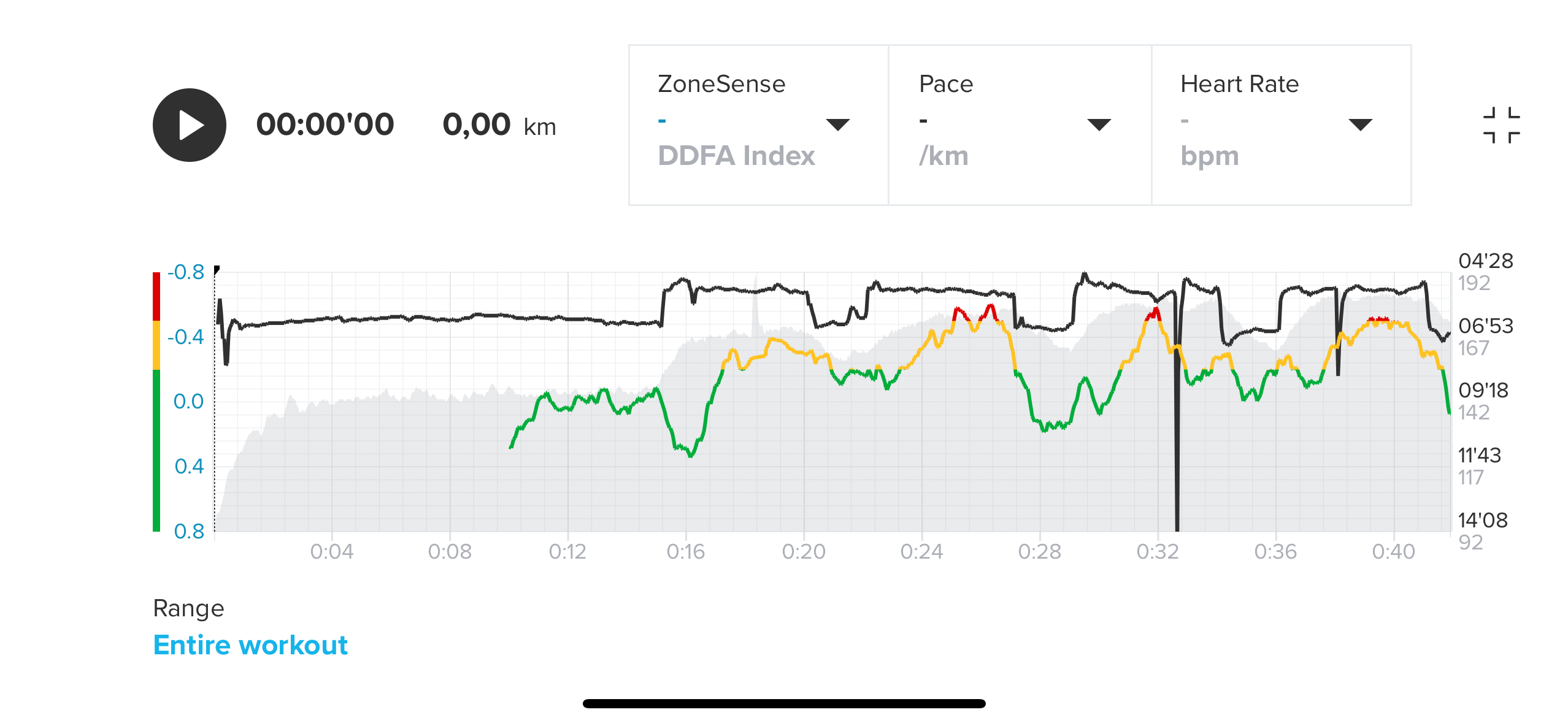
ZoneSense can also be seen “live” on your watch, but I had situations when the values were not the same, I mean the after workout analysis available in the mobile app has shown something a bit different from the real time data – they are still (in my case close enough) – in my case, ZoneSense aligns well with my feeling. For races (longer ones I mean) you could use it to guide you .. but the first 10 mins should be slow/warm-up which is not the case in races .. so there are multiple suggestions that you should do the calibration prior to the race (like a warmup) and then start the race .. I’m not sure how that works. The quality of ZoneSense depends on the data quality and that depends on your chest strap … for me personally this wasn’t a love story – regardless of chest strap (H10 or Suunto or Garmin) I have issues most of the time in the first 5-15 mins of the run if the moistening is not perfect .. so ZoneSense requires me to wear a chest strap but the results aren’t always great. I’d rather use an optical sensor like Polar OH1 or Polar Verity Sense (which offer great stability and decent responsiveness) but they won’t provide the data for ZoneSense to work.
General usage – Vertical has 3 physical buttons and also a touch screen, all working fine. The touch screen is generally “locked” during daily life, until you press a button (unlike Apple) and you can also lock it during workouts as well (although I haven’t had any issues with ghost touches during activities) but the button based navigation through the watch menus is not as simple as with Garmin Fenix/Epix – let me explain: there are situations when you can go back with a push of a button because such “back” option doesn’t exist and you’ll use swipe on the touchscreen to go back .. which is not critical, but also not ideal or doesn’t strengthen your behaviour.
Firmware – Suunto moved into a cadence of quarterly releases for their devices (including Vertical), also started releasing beta versions of their firmware for eager public testers – for example I use now 2.40.44 which is supposed to be a hotfix for the 2025 Q1 release from March 2025. So, they got better at communicating, also need to improve the capacity to take features requests/improvements into new releases. Most of my tests were performed with 2.37.34/48, 2.39.20/44, 2.40.38.
Don’t look for smart features like music (streaming), payments – this is not part of what Suunto wants to offer. Things may change with the release of Suunto Run (today) which adds offline storage for music playing and payment support in China, so in the future we might see a change, but Vertical won’t be affected by that in any way.
Pricing – you can find the Suunto Vertical in several variants (Titanium Solar, Stainless Steel Solar, Stainless Steel – all with Sapphire glass) with different prices – between 450EUR and 670EUR – the positioning of the device is in the premium space and I’d say that the quality of the product won’t disappoint.
Conclusion.
From my experience, Vertical is a sturdy and reliable companion, better suited for adventurers and extreme hikers who expect/need long battery life, excellent GPS and altitude accuracy, very good map guidance. Solid, trustworthy and good looking.
For all the people looking to manage their steps, calories, sleep efficiency there are better devices which would serve you better – yeah, Vertical could do that, but it’s not great or doing a better job than other sport watches (I’m thinking of Polar, Garmin or Apple). Just take a look at the Alarms implementation – which is usable, but not as refined as the others – I mean you can’t select individual days for the alarm but only Weekdays/Daily/Once .. is this critical? No, but for those who expect Weekend days to be different (other than not having any alarm), this may sound disappointing. Still, this is an improvement from not having more than one alarm .. now you can have many.
Who should buy this watch
The Suunto Vertical Titanium Solar is ideal for:
- Trail runners, hikers, and outdoor adventurers who prioritize battery life and GPS accuracy
- Users who spend multiple days in the backcountry and need reliable navigation
- Those who appreciate a minimalist approach focused on core outdoor functions
- Users who find competing watches with extensive features overwhelming
It may not be the best choice for:
- Those seeking smart features like music storage, payments, or extensive app integration
- Road runners primarily focused on structured workout capabilities (or people focusing on biking – they may need Hammerhead integration)
- Users who want comprehensive 24/7 health tracking with deep insights
This watch represents excellent value for serious outdoor enthusiasts who prioritize core performance (GPS accuracy, battery life, durability) over additional smart features and are willing to invest in a premium product built to last.
In the end, it’s just a matter of limited resources and of priorities – Suunto doesn’t have the capacity to build so many things simultaneously, they need to focus on some aspects and they are doing that. And they are friendly with their customers (similarly in a way with Apple) that they are rolling out the new features to all devices supporting those, rather than artificially creating barriers like Garmin. So, I expect Vertical to still receive their attention at least as long as the hardware is able to operate the new features.
With that, enjoy your active life and focus on what matters for you!
Discover more from Liviu Nastasa
Subscribe to get the latest posts sent to your email.

 Liviu Nastasa