The topic isn’t new, but it’s one of the constant annoyances which followed me through the years of running with HR chest straps during the cooler season. I rumbled about the subject here a while back, but I decided to share some of my recent experiences, since this is something I image happens to a lot of people these days. I’ve mentioned some of the issues I encountered with Polar H10 here.
HR chest strap readings are often abnormal (high or low) during the first 5-15 minutes of running. This occurs until sweat (salty liquid) stabilizes the connection, at least in my case. The recommendation of the HR strap vendors is to moisten your strap before starting the exercises, most of them mentioning water for this purpose.
I did that, wet the strap, wet my chest … and .. sometimes it works, but far from always. Then, I decided to use some ultrasound gel, hoping that the consistency and connectivity will help … and .. sometimes it works, sometimes it doesn’t. That’s why, I switched to using the arm HR monitors like Polar OH1 and Polar Variety Sense – they are more comfortable (definitely during the summer) and accurate enough… yes, they have some data inertia, I mean a short delay to detect changes, but at least they are not affected by the static interference and the initial electrical signal misreading.
The reason for me switching back to using HR chest straps is the interest for Suunto Zone Sense, which is dependent on using a chest strap (any strap able to provide R-R values and leverage HRV in the exercise). More details about ZoneSense you can find here https://www.suunto.com/Content-pages/suunto-zonesense/.
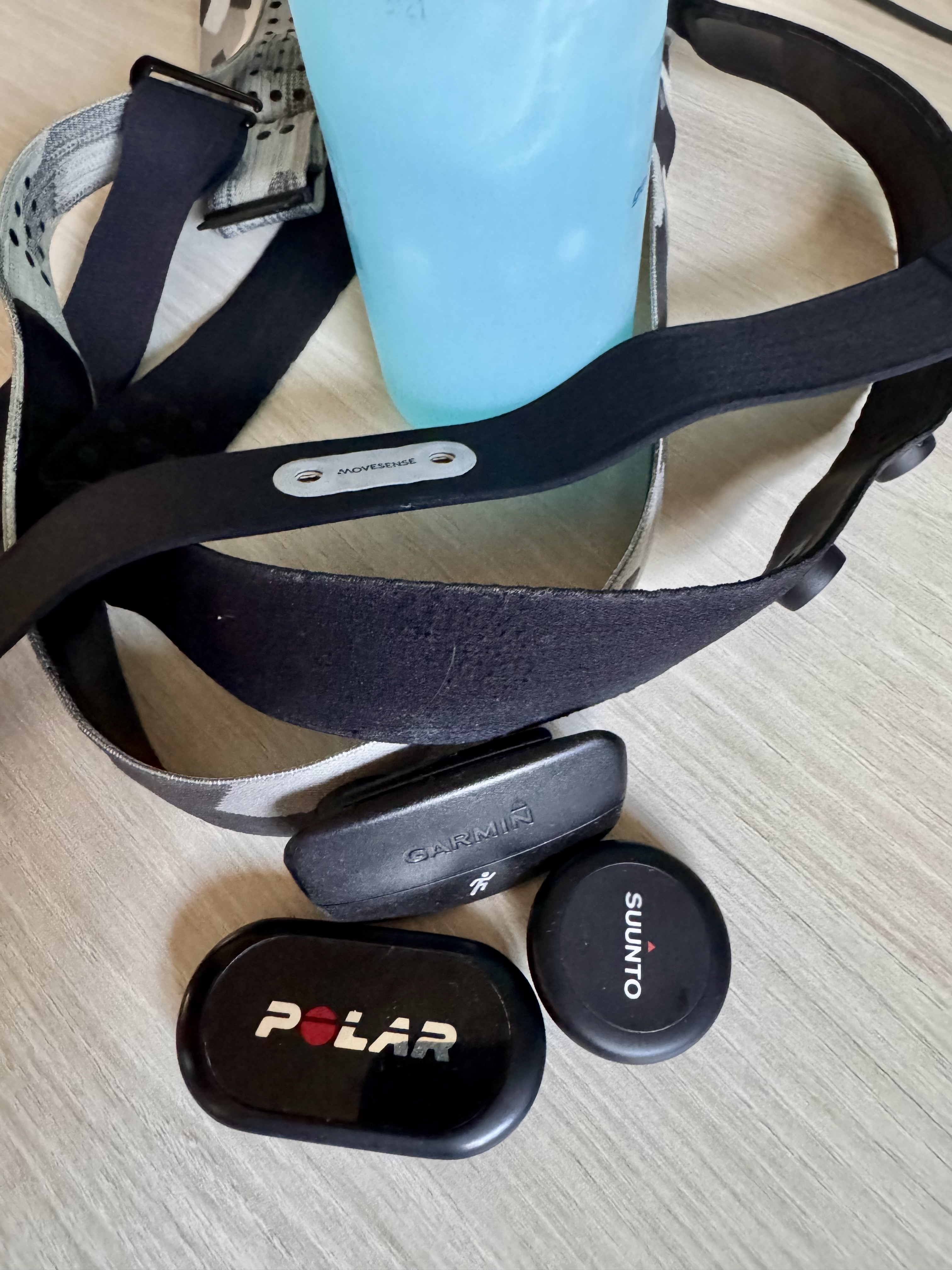
The results of using both Polar H10 (with two straps) and Suunto HR Sensor – the battery is new for both – can be seen below:
The list of images below shows Suunto ZoneSense (green/yellow/red), HR (black), pace (background) for running during the last two weeks – outdoor temperatures between 1 and 7 degrees Celsius.
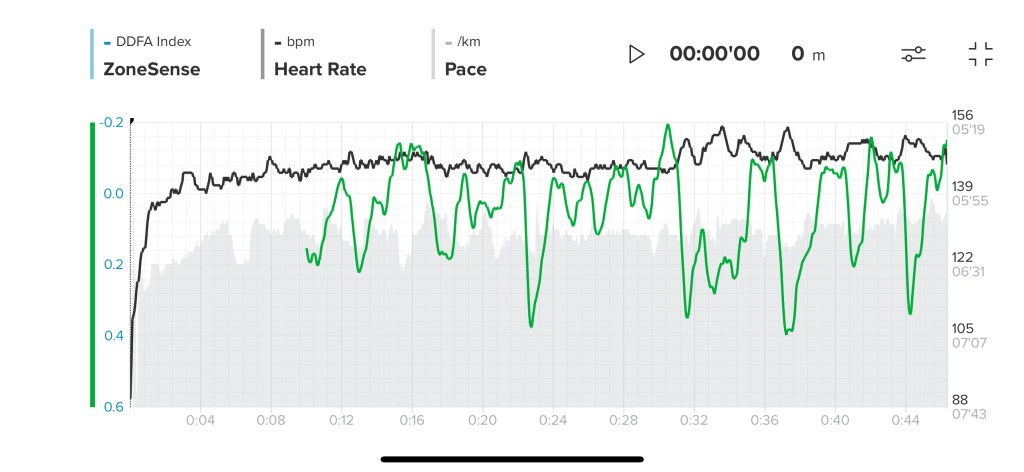
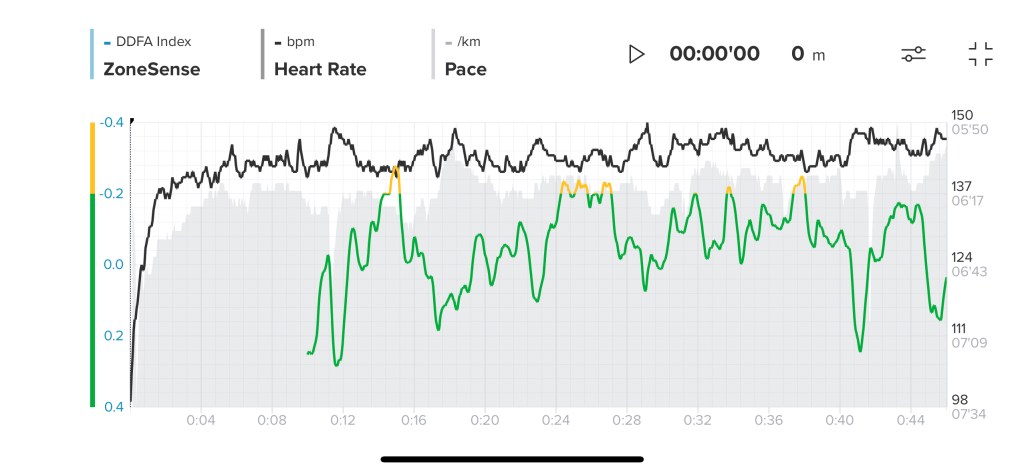
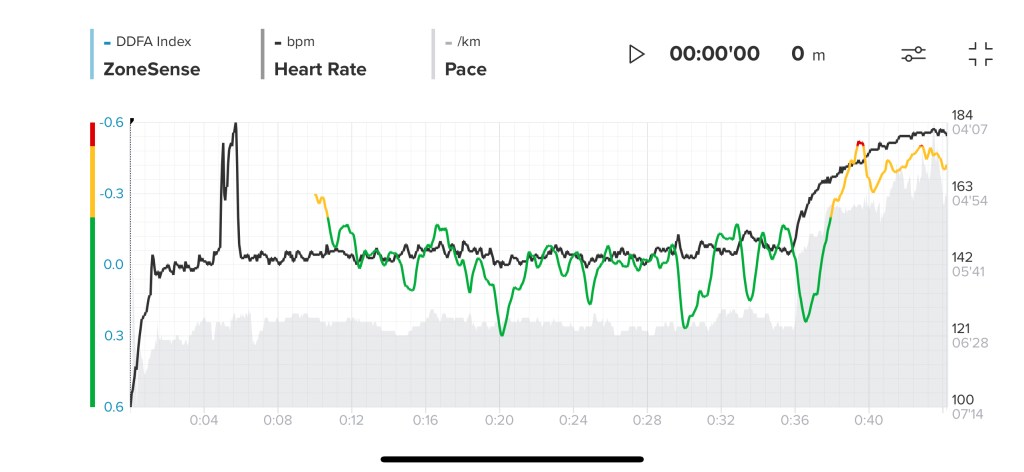
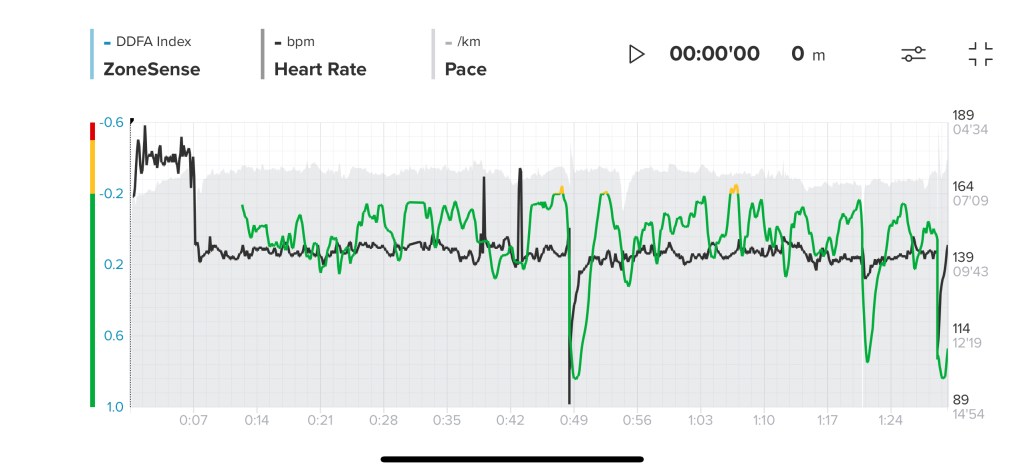
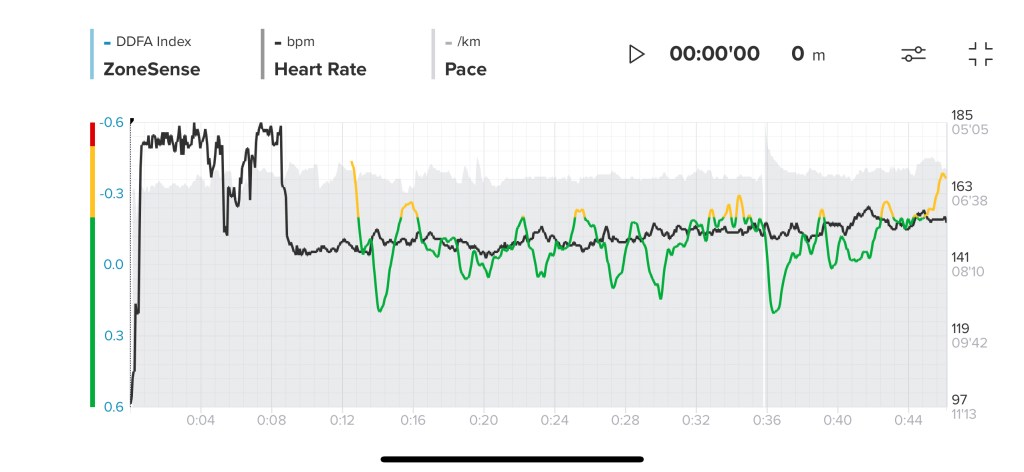
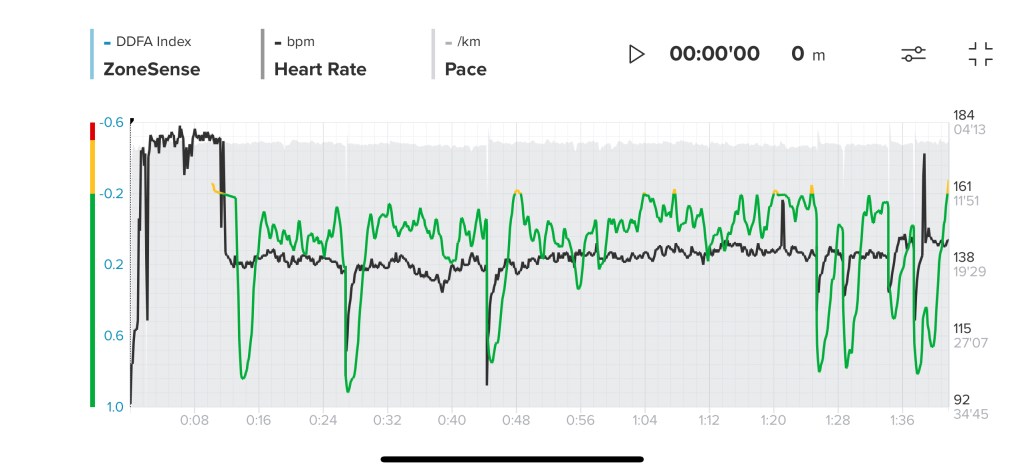
ZoneSense is displayed after 10 minutes so usually is not shown in the first minutes of HR heresy, reflects the way I feel while running and is my new way of looking at the intensity of my runs.






Looking at the R-R readings you can see that the “line” is getting more consistent when the HR readings are ok, otherwise the “clouds” are affecting the quality of the readings and I presume it affects also the conclusions from ZoneSense (but I didn’t go into the details of the algorithm to understand how it deals with the outlier values)
ZoneSense is using the first 10 minutes for “calibration” so I’m just wondering how much is the rest of the information affected by the misreading in the first 10 minutes. I raised this question on Suunto forum, maybe someone could help me with some additional information.
In the end, if you respect your training protocol (which doesn’t happen in the first 10-15 mins .. that’s just the warm-up), you could discard the anomalies created by these readings and do your training anyway, but in the end all the stats (HR related or TSShr) will be somehow skewed. Some “systems” like Garmin’s are more sensitive to these anomalies, as Performance Condition is calculated also in the first minutes of the run and also Execution Score … or any other derived indicator using the HR from the first part of the run – Suunto is less affected by that, but still .. you’re in HR Zone 5 for a while and the average HR for the run is not that much of use to create comparison between sessions and derive some conclusions on the progress (stagnation or regress).
Advices to maybe follow [ranked from my perspective]:
- moisture management – maybe trying saline water instead of eco gel or plain water will help (water works ok if I go out some minutes after I submerged the strap under water, but if I need to drive 15 mins to the start point, it doesn’t matter anymore)
- warm-up routine – you could try to “provoke the sweat” before going out
- static electricity reduction – move from synthetic fabrics to cotton/wool layer to reduce
These ideas clearly aren’t set-in-stone solutions, but they’re things I’ve found worth trying to make HR chest straps more reliable in cooler weather. Like anything, your results might differ depending on your gear, the conditions you run in, or even how your body reacts. For now, I’ll continue testing and refining these methods, sharing updates along the way. If you’ve faced similar challenges, I’d love to hear what worked—or didn’t work—for you.
Discover more from Liviu Nastasa
Subscribe to get the latest posts sent to your email.

 Liviu Nastasa